Scaffolding plays a crucial role in construction safety. It provides temporary support for workers and materials. However, improper use can lead to serious accidents. Thus, understanding what are the safety regulations for scaffolding is vital for protecting lives.
In China, scaffolding safety regulations are designed to safeguard workers. These regulations encompass various aspects, including materials used, assembly procedures, and training. Compliance with these regulations is essential for ensuring a safe working environment. Many companies lack full awareness of these rules. This often leads to unsafe practices on site.
The importance of scaffolding safety cannot be overstated. Each year, numerous accidents occur due to negligence. Insufficient training and improper equipment are common issues. It is not just about following guidelines but also fostering a culture of safety. Workers must be educated continuously. Safety regulations should be a priority, not an afterthought. Employers need to reflect on their practices and make necessary improvements.
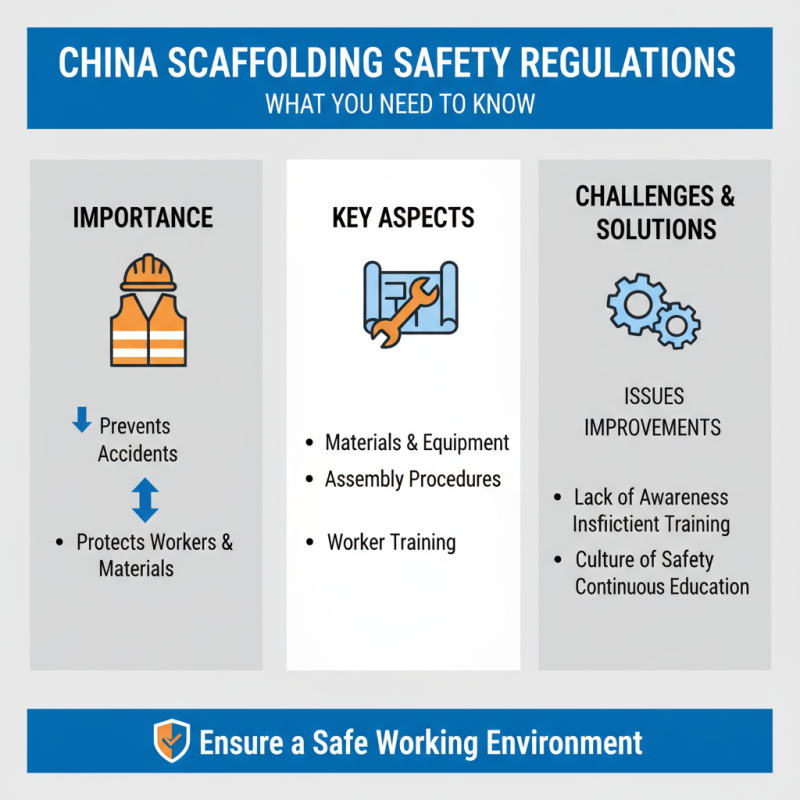
China's scaffolding safety regulations aim to enhance worker protection on construction sites. The key framework focuses on safety standards, training requirements, and regular inspections. According to the Occupational Safety and Health Administration, poor scaffolding safety leads to 65% of fall injuries in construction. This highlights the necessity of strict adherence to guidelines.
The objectives of these regulations are to minimize accidents and improve worksite safety culture. Training must address equipment use, proper assembly, and load distribution. Reports indicate that 30% of workers feel inadequately trained on scaffolding safety. Regular inspections are crucial. Inconsistencies in these inspections can result in tragic outcomes.
Challenges remain in the effective implementation of these regulations. Some construction firms prioritize cost over safety, leading to lapses. Furthermore, many workers report a lack of awareness regarding existing safety standards. This gap underlines the need for continual education and rigorous enforcement of regulatory measures. Proper scaffolding safety protocols are essential yet often overlooked, demanding urgent attention from all stakeholders.
Scaffolding safety is critical in the construction industry. According to OSHA, falls are responsible for about 33% of construction fatalities. Proper scaffolding reduces this risk significantly. In fact, having a well-designed scaffold can lower the fall risk by 50% or more.
Regular safety inspections are essential. A study showed that 75% of scaffolding accidents are due to improper use or structural failures. Workers must understand load capacities and assembly guidelines. Despite training programs, some workers still overlook these aspects. This can lead to serious injuries or even fatalities.
Continuous education and adherence to local safety regulations are vital. Inadequate scaffolding practices not only risk lives but can also result in costly delays. A recent report stated that accidents can increase project costs by up to 10%. Therefore, proper scaffolding management is not simply a legal requirement; it is an ethical responsibility in the construction field.
| Regulation | Description | Importance | Compliance Level |
|---|---|---|---|
| Standardization of Materials | Ensures that all scaffolding materials meet national safety standards. | Reduces risk of collapse due to material failure. | High |
| Training and Certification | Mandates proper training for all personnel involved in scaffolding assembly and use. | Ensures safety practices are understood and applied correctly. | Medium |
| Regular Inspections | Requires ongoing inspections of scaffolding before and during use. | Identifies and mitigates potential safety hazards. | High |
| Weight Limit Regulations | Defines maximum load capacities for scaffolding to prevent overloading. | Prevents structural failures due to excessive weight. | High |
| Fall Protection Requirements | Mandates the use of guardrails and other fall prevention measures. | Significantly reduces risk of falls from height. | Very High |
Scaffolding safety regulations in China are vital for ensuring worker safety on construction sites. Compliance with essential standards can minimize accidents and injuries. Workers must understand the regulations to operate safely. The use of proper materials and techniques is crucial. The regulations cover design, assembly, and maintenance of scaffolding systems.
Tips: Always inspect scaffolding before use. Check for structural integrity and stability. If you notice any issues, report them immediately. Regular training can help workers stay informed about safety practices.
Moreover, compliance requires understanding local laws. Each region may have specific guidelines. Keep updated with these regulations to avoid penalties. Remember, a safe site fosters productivity. Good communication with team members enhances safety awareness. Establishing a culture of safety is key.
Scaffolding in construction sites presents various hazards, especially in China, where safety regulations are stringent. Common risks include falls from heights, scaffold collapses, and being struck by falling objects. These hazards can lead to serious injuries, making it essential to implement effective preventative measures.
Using guardrails is a vital step in reducing the risk of falls. Proper training is also critical. Workers must understand how to use scaffolding equipment safely. Regular inspections of scaffolding structures can identify issues before they lead to accidents. However, despite these precautions, accidents can still happen, often due to human error or equipment failure.
Weather conditions can exacerbate risks. High winds or rain can make scaffolding unstable. Temporary solutions might tempt contractors, but these can compromise safety. Employers should prioritize comprehensive safety training programs and invest in high-quality materials. Real-life case studies reveal gaps in safety practices that need addressing. Implementing better policies and fostering a culture of safety can significantly reduce incidents in the long run.
Safety regulations for scaffolding in China significantly impact construction site accidents. Data shows that adherence to strict scaffolding guidelines leads to lower injury rates. Companies that implement comprehensive safety measures often see a 30% decrease in accidents. This reduction not only protects workers but also enhances overall project efficiency.
However, some sites still struggle with compliance. Despite established guidelines, many workers face unsafe conditions due to negligence. For instance, improper installation or lack of training can create hazardous environments. These issues highlight the ongoing need for regular training and inspections. Connecting safety data with real-world outcomes emphasizes the importance of continual improvement in safety practices.
Understanding the nuances of safety regulations is crucial. Workers must be empowered to voice concerns. Safety is not just about guidelines; it's also about culture. Encouraging communication can bridge gaps in awareness. Thus, fostering a safer work environment is a collective responsibility for all involved in construction.
: The main goal is to enhance worker protection and minimize accidents on construction sites.
Regular inspections identify potential issues, preventing accidents before they occur.
Poor scaffolding safety contributes to 65% of fall injuries on construction sites.
Reports show that 30% of workers feel inadequately trained on scaffolding safety.
Common hazards include falls from heights, scaffold collapses, and being struck by falling objects.
Utilizing guardrails and providing proper training are crucial in reducing scaffolding risks.
High winds or rain can make scaffolding unstable, increasing the risk of accidents.
Some firms prioritize cost over safety, leading to lapses in regulations and practices.
Many workers lack awareness of safety standards, emphasizing the need for ongoing training.
Proper scaffolding safety protocols are essential but frequently ignored on construction sites.
The article titled "China Best Scaffolding Safety Regulations What You Need to Know" provides a comprehensive overview of scaffolding safety regulations in China, emphasizing their critical role in the construction industry. It outlines the key framework and objectives of these regulations, highlighting the importance of ensuring worker safety and preventing accidents. Understanding what the safety regulations for scaffolding entail is crucial for compliance; this includes adherence to essential standards and requirements that govern scaffolding practices.
Furthermore, the article discusses common hazards associated with scaffolding and suggests preventative measures to mitigate risks effectively. It supports the argument for robust safety regulations by presenting data-driven insights into the impact of these regulations on reducing construction site accidents. By prioritizing scaffolding safety, the construction industry can safeguard workers and enhance overall operational efficiency.

Shubrixa Build