Choosing the right scaffold system for your project is crucial for safety and efficiency. John Smith, a veteran scaffolding expert, emphasizes, "Understanding how to choose between different scaffold systems can save you time and money." This statement highlights the importance of informed decision-making in scaffolding.
Different projects require different scaffolding solutions. You may face challenges when balancing safety, cost, and functionality. It's essential to carefully evaluate your project's specific needs. Consider the height, weight requirements, and site conditions. Each factor plays a significant role in your decision.
When deciding on a scaffold system, think about flexibility and ease of use. Some systems are easier to assemble and dismantle. Others provide better stability for complex structures. Mistakes in the selection process can lead to delays and increased costs. Reflect on your options and seek advice from reliable sources. This approach can enhance your project's overall success and safety.
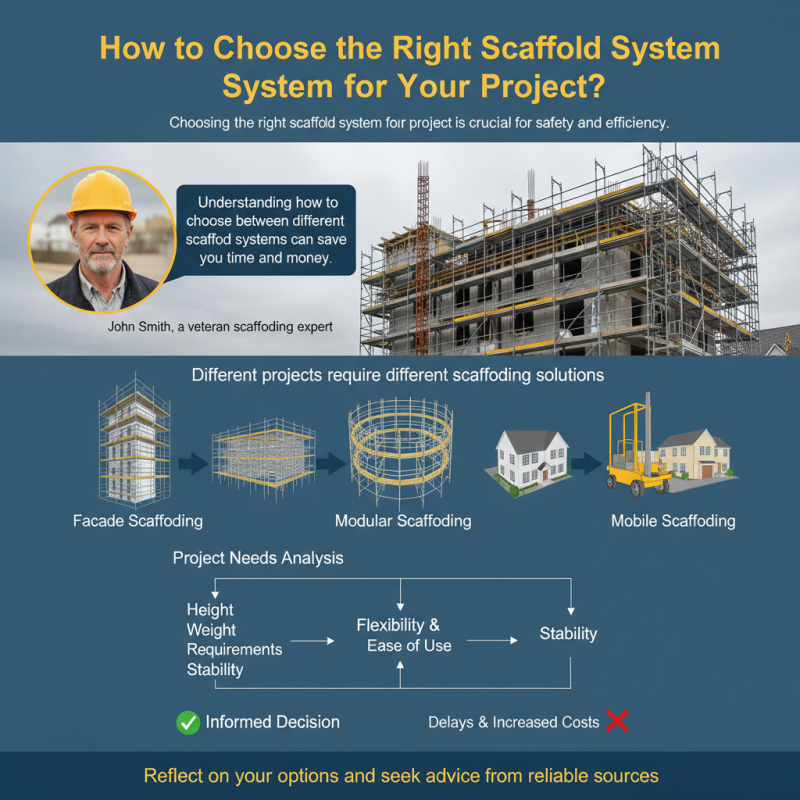
When exploring different types of scaffold systems, it’s crucial to understand the specific needs of your project. There are several options available, each tailored for various construction tasks. For instance, frame scaffolding is a common choice due to its ease of assembly and versatility. It's ideal for smaller projects where workers need quick access to different heights.
On the other hand, modular scaffolding systems offer a custom solution for complex structures. They consist of interchangeable components, allowing for adjustments based on site requirements. This type can be more expensive and may require skilled labor for assembly. Evaluating the scale of your project is essential. A simple project may not need the sophistication of a modular system.
Additionally, safety is a critical consideration. Ensure any scaffolding system chosen meets current safety standards. Using old or improperly maintained equipment can lead to accidents. Reflecting on these factors can lead to better decision-making, ensuring both efficiency and safety on the job site.
This chart represents the weight of different scaffold systems commonly used in construction projects. It provides an overview to help in choosing the right scaffold type based on weight considerations for safety and efficiency.
Selecting the right scaffold system involves careful evaluation of project requirements and site conditions. Each project is unique, with diverse needs that influence scaffold choice. For instance, according to the Scaffold and Access Industry Association (SAIA), scaffold-related incidents can be reduced by up to 70% when appropriate systems are employed.
Consider the job specifications. The size and weight of materials, height of the structure, and accessibility all matter. A complex site may require modular scaffolds, while simple jobs could use basic systems. Assessing the ground conditions is equally crucial. A stable foundation reduces risks significantly.
Tips: Ensure the surface is even and can support scaffold weight. Check for overhead obstructions.
Finally, gather expert insights when needed. Collaboration with professionals can highlight potential site hazards and compliance issues. For example, local regulations may dictate scaffold dimensions or materials. Misjudgment here can lead to costly delays or safety fines.
Tips: Always consult a structural engineer. Document site conditions before starting work.
Choosing the right scaffold system hinges on load capacity and safety. Assessing these elements ensures a secure work environment. Each project has unique demands. Consider the materials involved and the expected load. Overestimating or underestimating can lead to accidents.
Safety standards are paramount in scaffold construction. Review regulations that apply to your region. These can differ significantly. Familiarizing yourself with local guidelines protects your crew and site. Involve a structural engineer if needed. Their expertise can prevent costly mistakes.
Here are some tips: Confirm the scaffold can handle the specific loads. Use calculations or load charts. Regularly inspect your scaffold setup. Look for signs of wear or damage. Remember, a safe site promotes efficiency. Prioritize ongoing training for your team on safety protocols. This investment pays off in safety and productivity.
When evaluating scaffold systems, cost plays a crucial role. Industry reports indicate that scaffolding can account for up to 20% of a project's total budget. Therefore, understanding the financial implications of different scaffold options is essential. Depending on the type, costs can vary significantly. For instance, traditional tube and clamp systems may have lower initial costs but higher labor expenses. Alternatively, modular systems offer faster assembly but can be pricier upfront.
Budget considerations also extend to maintenance and safety. Regular inspections and repairs can add unforeseen expenses. A survey by the Scaffold Industry Association highlighted that 30% of project delays stem from scaffold-related issues. This can lead to increased labor costs and extended project timelines. Selecting a scaffold system that balances upfront costs with long-term reliability is critical.
Choosing a system solely based on initial cost may overlook these important factors. For instance, investing in a high-quality system can lead to fewer accidents, reducing potential liabilities. In contrast, opting for the cheapest option might seem smart initially but could result in costly setbacks. Decision-makers should weigh both immediate costs and the total cost of ownership carefully.
When considering the right scaffold system for your project, consulting professionals is essential. Experienced engineers and contractors can provide valuable insights into the types of scaffolding that best fit your needs. They understand the nuances of different materials and designs. Engaging with these experts can prevent costly mistakes and ensure safety. It can also enhance your project’s efficiency.
Reviewing regulations is another critical aspect. Local regulations dictate the specifications for scaffolding systems. Ignoring these regulations can lead to safety hazards and fines. Each region may have different requirements, such as load capacities and safety checks. It’s vital to familiarize yourself with these laws early in the planning phase. Also, remember that regulations can change, so staying updated is necessary.
Even with professional guidance and regulatory knowledge, some uncertainties remain. For instance, a product deemed safe in one context may not be suitable in another. It’s important to evaluate every situation on a case-by-case basis. Regular safety audits and inspections are necessary as scaffolding is used. Reflecting on past projects can help inform your current choices, but always be prepared to adapt.
: Frame scaffolding is common for small projects. Modular systems are better for complex constructions.
Professionals offer valuable insights into materials and designs. Their experience helps avoid costly mistakes.
Regulations dictate load capacities and safety checks. Ignoring them can lead to safety hazards and fines.
Ensure the scaffolding meets safety standards. Old or poorly maintained equipment can lead to accidents.
Assess your project needs. Consider size, complexity, and the skills required for assembly.
Regular audits ensure the scaffolding remains safe for use. They help identify potential risks early.
Yes, context matters. Always evaluate the specific situation to ensure the right choice.
Regulations can change often. Staying informed helps maintain compliance and ensures safety on-site.
Choosing the right scaffold system for your project requires a comprehensive understanding of the various types available in the market. It's essential to evaluate your project requirements and site conditions, as these factors significantly influence your selection. Additionally, assessing the load capacity and safety standards of different scaffold systems ensures that they will meet the demands of your project while maintaining safety for workers.
Cost analysis and budget considerations also play a crucial role in making an informed decision. When figuring out how to choose between different scaffold systems, consulting with professionals and reviewing relevant regulations can provide valuable insights, helping to minimize risks and ensure compliance. By considering these aspects thoroughly, you can select a scaffold system that aligns with both your operational needs and budget constraints.

Shubrixa Build