Construction materials often determine whether a project remains profitable, safe, and on schedule. This guide explains how to manage construction materials efficiently, from purchasing and delivery to storage and final installation. Small mistakes can create serious delays. A missing box of fasteners may stop an entire crew for hours.
Effective management begins with accurate planning and practical site experience. Material quantities should match drawings, specifications, approved changes, and realistic waste allowances. Experienced supervisors also check delivery conditions before signing acceptance documents. Broken cement bags, warped timber, or damp insulation should be recorded immediately. Photographs, delivery tickets, and updated inventory records create reliable evidence.
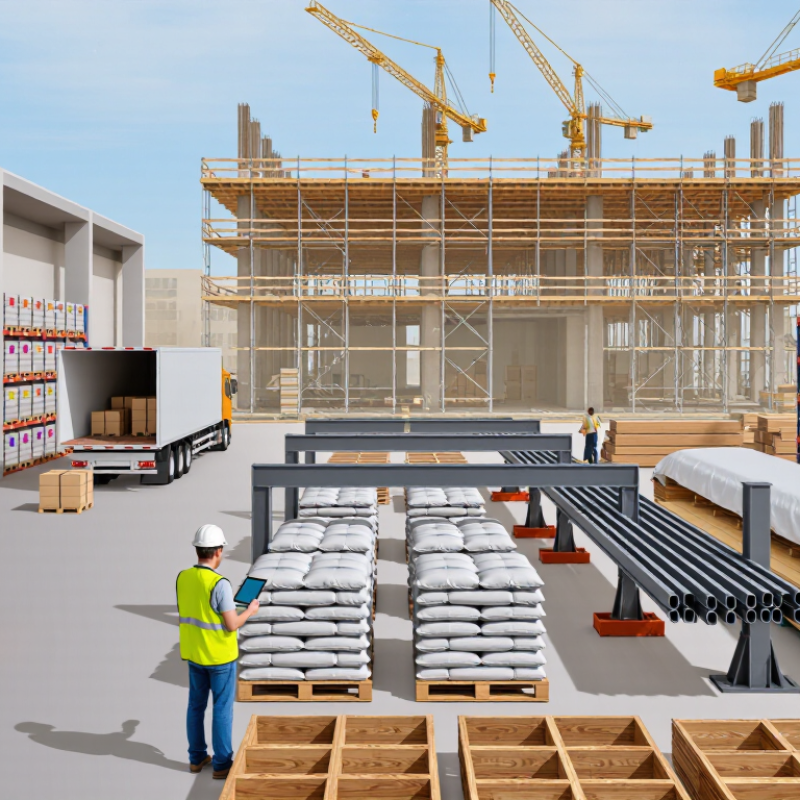
Storage conditions deserve equal attention. Steel should remain supported above standing water. Timber needs ventilation and protection from direct rain. Cement and other moisture-sensitive products require dry, raised platforms. Clear labels help workers find materials quickly and reduce unnecessary handling. They also support safe movement around crowded work areas.
Digital tracking can improve visibility, but technology alone cannot solve poor communication. A simple daily check may reveal that materials were moved without being recorded. That assumption can fail. Regular coordination between buyers, suppliers, site managers, and subcontractors remains essential. Reorder points should reflect lead times, weather risks, and changing construction schedules.
The following sections examine purchasing controls, receiving procedures, storage methods, inventory tracking, waste reduction, and supplier performance. They also consider common weaknesses, including over-ordering and inaccurate forecasts. No system is flawless. Careful review helps teams improve before small material problems become expensive project failures.
Assess Material Demand with Quantity Takeoffs and a 5–10% Contingency
Efficient material management begins with a reliable quantity takeoff. Review the latest drawings, specifications, and site conditions together. Do not measure from outdated documents. A small revision can change hundreds of units. Experienced estimators also walk the site when possible. They check access, storage space, existing structures, and installation constraints. These details often expose needs that drawings cannot show.
Break quantities into clear categories, such as concrete, reinforcement, finishes, fittings, and temporary materials. Record units carefully. Mixing square meters with square feet creates expensive mistakes. Compare the takeoff with historical project data, but treat past figures as guidance, not proof. Different crews, designs, and delivery conditions can produce different consumption rates. I once underestimated cutting waste because the layout looked simple on paper. It was not.
Add a 5–10% contingency after calculating the realistic base quantity. Use the lower end for standardized materials and stable designs. Use the higher end for fragile products, complex cuts, uncertain ground conditions, or frequent design changes. The contingency should be explained, not guessed. Separate damage, waste, theft risk, and design uncertainty in the records. Recheck quantities before each major order, especially after inspections or revisions. Keep a written variance log. It may feel tedious. However, comparing ordered, delivered, installed, and leftover materials reveals where the estimate failed. That feedback improves the next takeoff and protects both schedule and budget.
Standardize Specifications and Procurement Across Materials’ 50–60% Cost Share
How to Manage Construction Materials Efficiently?
Materials often consume 50–60% of a project’s direct construction cost. That share deserves engineering discipline, not last-minute purchasing. Standardize specifications before tendering. Define grade, dimensions, tolerances, approved alternatives, packaging, and inspection rules in one controlled schedule. This reduces substitutions that appear cheaper but create rework later.
McKinsey reports that construction productivity has increased by only about 1% annually over recent decades. Material confusion contributes to that stagnation. A shared specification library can connect design, procurement, and site teams. Use common item codes and measurable acceptance criteria. The U.S. Bureau of Labor Statistics’ Producer Price Index also shows why timing matters: construction input prices can shift sharply during supply disruptions. Lock prices only when delivery capacity is credible. Cheap paper savings can become expensive storage.
Waste is visible. On many projects, it is not measured carefully. An FMI and PlanGrid industry study reported that about 14% of materials are wasted in construction. Track damaged, over-ordered, unused, and rejected items separately. Set delivery windows around installation dates, not warehouse convenience. Store cement in dry, raised areas, and protect steel from standing water. I have seen teams standardize product names but ignore site handling. That is an incomplete fix. Review specifications after each project, especially where approved alternatives caused delays or quality concerns. Perfect standardization is unrealistic. Disciplined learning is better.
Track Inventory and Storage Losses Against the 30% Construction-Waste Benchmark
How to Manage Construction Materials Efficiently?
A 30% construction-waste benchmark should be treated as a warning line, not a target to accept. The U.S. Environmental Protection Agency estimated 600 million tons of construction and demolition debris in 2018. About 145 million tons went to landfills. These figures show why inventory accuracy must include damaged, misplaced, and unused materials.
Record every delivery before it reaches the workface. Photograph pallet condition, count units, and assign storage locations. Compare issued quantities with drawings, purchase orders, and daily installation records. A simple weekly dashboard can show material received, installed, returned, damaged, and missing. Track storage losses separately. They often hide behind “normal handling.”
Our first count was wrong. We discovered that wet insulation and cut timber were recorded as installation waste, although poor covering caused much of the loss. The review changed our practice: raised pallets, sealed packaging, covered aggregate, and checked high-risk areas each afternoon. Small controls matter. The International Resource Panel reports that material extraction and processing contribute significantly to global environmental pressure, making waste prevention more valuable than disposal alone. The EPA’s 2018 data also recorded approximately 455 million tons of recovered construction and demolition debris, proving that measurement can support better recovery. Still, recovery is not a substitute for prevention. Managers should investigate every variance above the 30% benchmark, document the cause, and adjust ordering, storage, or sequencing rather than simply blaming site crews.
Recorded Material Value
USD 415,510
Storage Loss Value
USD 2,157.50
Weighted Storage Loss Rate
0.52%
Reference Waste Benchmark
30.00%
Construction Material Inventory and Storage Loss Reconciliation
| Material Category |
Unit |
Planned Quantity |
Received Quantity |
Issued Quantity |
Book Closing Stock |
Physical Count |
Storage Variance |
Unit Cost (USD) |
Loss Value (USD) |
Loss Rate |
Benchmark Status |
Recommended Control |
| Cement |
Bag |
1,200 |
1,200 |
1,080 |
120 |
112 |
-8 |
8.50 |
68.00 |
0.67% |
Within control |
Use raised pallets and first-in, first-out rotation. |
| Reinforcing Steel |
Metric ton |
85.0 |
85.0 |
78.0 |
7.0 |
6.6 |
-0.4 |
720.00 |
288.00 |
0.47% |
Within control |
Store above ground and protect from standing water. |
| Aggregates |
Cubic meter |
600 |
600 |
540 |
60 |
54 |
-6 |
32.00 |
192.00 |
1.00% |
Within control |
Use dedicated bays and measure stockpile profiles regularly. |
| Clay Bricks |
Piece |
18,000 |
18,000 |
16,200 |
1,800 |
1,710 |
-90 |
0.55 |
49.50 |
0.50% |
Within control |
Limit stack height and use protected unloading zones. |
| Structural Timber |
Cubic meter |
250 |
250 |
225 |
25 |
22.5 |
-2.5 |
260.00 |
650.00 |
1.00% |
Within control |
Cover stacks, provide ventilation, and inspect for moisture damage. |
| Gypsum Boards |
Sheet |
4,000 |
4,000 |
3,600 |
400 |
380 |
-20 |
11.00 |
220.00 |
0.50% |
Within control |
Keep dry and move sheets with two-person handling. |
| Insulation |
Square meter |
3,200 |
3,200 |
2,800 |
400 |
384 |
-16 |
7.50 |
120.00 |
0.50% |
Within control |
Seal packaging and protect rolls from compression and water. |
| Plastic and Metal Pipes |
Linear meter |
1,500 |
1,500 |
1,200 |
300 |
294 |
-6 |
14.00 |
84.00 |
0.40% |
Within control |
Use labeled racks and secure loose lengths against rolling. |
| Floor and Wall Tiles |
Square meter |
9,000 |
9,000 |
8,100 |
900 |
873 |
-27 |
18.00 |
486.00 |
0.30% |
Within control |
Inspect pallets on arrival and avoid double handling. |
| Total Storage Loss |
— |
2,157.50 |
0.52% |
Below benchmark |
Continue cycle counts and exception-based investigations. |
Calculation notes:
Storage variance equals physical count minus book closing stock. Loss value equals the absolute storage variance multiplied by unit cost. Loss rate is calculated against received quantity for each material. The 30% reference is a total construction-waste benchmark and should not be interpreted as an acceptable inventory-storage-loss target.
Reuse, Recycle, and Audit KPIs to Improve Circular Material Efficiency
Construction material efficiency begins with a simple site question: can this item be reused before it becomes waste? Store undamaged timber, bricks, pipes, and temporary supports separately. Protect them from rain, mud, and careless handling. Eurostat reported approximately 374 million tonnes of construction and demolition waste in the European Union in 2020, representing about 38% of total waste. That volume makes reuse a practical control, not an idealistic target.
Measure the misses. Track material purchased, installed, reused, recycled, damaged, and sent to landfill. A useful reuse rate is reused materials divided by total materials removed. Add contamination rate, recovery cost per tonne, and average storage time. The US Environmental Protection Agency estimated 600 million tons of construction and demolition debris in 2018, more than twice municipal solid waste. A weekly audit can expose hidden losses, such as unopened cartons damaged by forklifts or surplus plasterboard left behind.
Make each KPI visible at the material gate. Photograph stockpiles, record weights, and compare delivery notes with installation records. Reuse targets can fail when teams count planned recovery instead of actual recovery. That mistake is common. The audit should also include rejected loads, because contaminated recycling often becomes disposal. UNEP’s 2024 materials report highlights the major climate impact of construction materials, especially cement, steel, and aluminium. Managers should therefore prioritise high-impact materials, not only the cheapest waste stream. Perfect data is unlikely, but honest gaps reveal where the next improvement belongs.
How to Manage Construction Materials Efficiently?
Reuse, recycle, and audit KPIs to improve circular material efficiency
In 2018, the United States generated approximately 600 million short tons of construction and demolition debris. About 455 million tons were recycled or recovered, while 145 million tons were sent to disposal facilities, producing an overall diversion rate of approximately 75.8%. Regular audits should track recovery volume, disposal volume, and the diversion rate to identify opportunities for reuse and improved material sorting.
Source: U.S. Environmental Protection Agency, Construction and Demolition Debris Generation in the United States, 2018.
Conclusion
Effective construction material management begins with accurate planning. Teams should assess material demand through detailed quantity takeoffs and add a practical 5–10% contingency to cover measurement errors, design changes, and unexpected site conditions. Standardizing specifications, comparing suppliers, and coordinating procurement across material categories can control expenses, especially when materials represent roughly 50–60% of total project costs. Clear documentation also helps prevent incompatible purchases and unnecessary substitutions.
Technology and disciplined site practices further improve efficiency. Building Information Modeling (BIM) can support precise scheduling, while just-in-time delivery reduces congestion, damage, and excess storage. Managers should track inventory, delivery timing, usage, and storage losses against the commonly cited 30% construction-waste benchmark. Finally, reusable components should be recovered whenever practical, and recyclable materials should be sorted responsibly. Regular KPI audits—covering waste, cost variance, surplus inventory, and reuse rates—help teams identify problems early and continuously improve how to manage construction materials efficiently.

 Shubrixa Build