Scaffolding supports demanding work at height, but small mistakes can create serious consequences. A loose plank, missing guardrail, or rushed inspection may expose workers to falls, falling materials, or unstable platforms. Understanding how to prevent accidents on scaffolding begins with treating every structure as a safety-critical work area.
This guide presents ten practical controls used by experienced contractors, site supervisors, and trained scaffold inspectors. It covers competent assembly, level foundations, secure access, safe loading, guardrails, toe boards, weather checks, and daily inspections. Workers should follow manufacturer instructions, approved site procedures, and applicable local safety regulations. Training also matters. A worker who understands load limits can recognize danger before a platform bends or shifts.
Details often reveal the real risk. Mud around a base plate, an uncovered gap, or a tool resting near an edge deserves immediate attention. Clear communication helps, especially when several trades share one scaffold. No control is perfect, however. Even careful teams can miss a damaged coupler during a busy shift. That weakness should encourage better inspection habits, not false confidence. Supervisors need to record defects, stop unsafe access, and arrange repairs through qualified personnel. Workers should speak up when conditions change, including strong winds, ice, poor lighting, or unexpected materials. Practical experience, reliable guidance, and honest review can turn these ten methods into daily protection rather than paperwork.
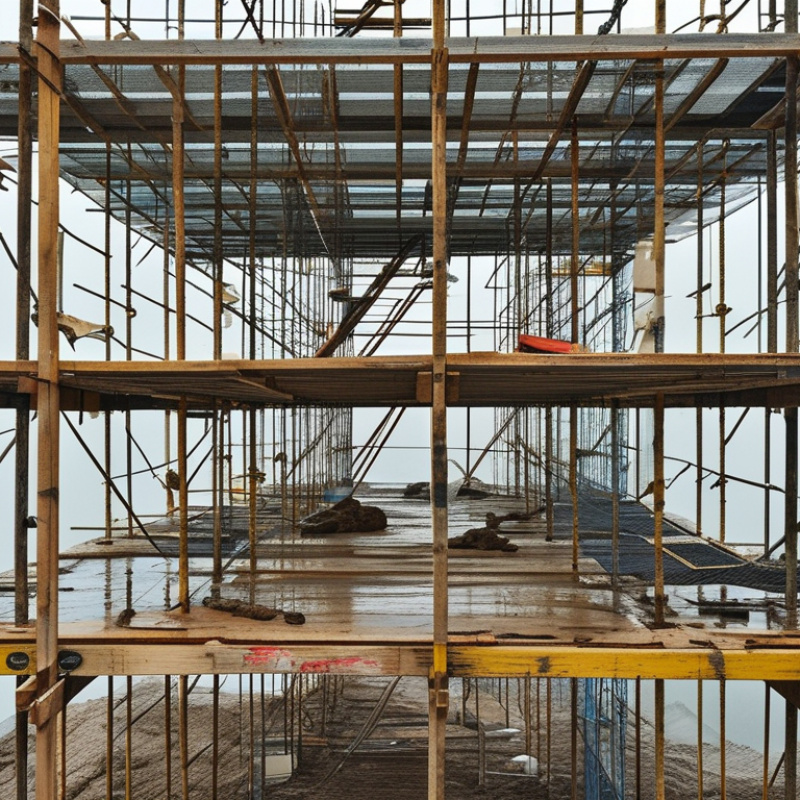
Preventing scaffolding accidents begins before any tube is assembled. Designers should match the scaffold to the building, work height, load class, access needs, and ground conditions. A competent engineer should verify stability, tie patterns, bracing, platform width, edge protection, and safe access. Do not trust a familiar layout. A small change in façade geometry can create a serious weakness. Plans should show maximum loads and prohibited loading zones.
Risk assessment must reflect real work, not only drawings. Walk the site before delivery. Check overhead services, vehicle routes, excavations, wind exposure, falling-object risks, and nearby public areas. Workers need clear controls for assembly, alteration, use, and dismantling. Weather limits must be practical, with an agreed stop-work trigger for high winds or ice. Emergency planning matters too; rescuers should know how to reach an injured worker without improvising. I have seen teams discuss rescue only after an incident. That delay is preventable.
Compliance planning keeps safety duties visible throughout the project. Use qualified personnel, documented inspections, and a handover process before access begins. Inspect after installation, modification, impact, and severe weather. Record defects with photographs, locations, corrective actions, and close-out dates. Supervisors should compare the scaffold with the approved design rather than memory. Small omissions matter. A missing toe board, loose coupler, or blocked ladder can change a controlled task into a fall exposure. Review meetings should invite workers’ observations, because practical concerns often reveal design assumptions that failed on site.
| No. | Accident-Prevention Method | Design and Risk-Control Requirements | Key Planning Data | Inspection or Verification | Compliance Evidence |
|---|---|---|---|---|---|
| 1 | Use a Competent Design and Erection Plan | Prepare drawings and instructions that address scaffold type, height, dimensions, access, foundations, bracing, ties, loading, weather, and nearby hazards. | Design must reflect the intended duty rating, number of workers, stored materials, platform dimensions, and environmental conditions. | Review the plan before erection and whenever the scaffold is altered, relocated, overloaded, or exposed to unusual conditions. | Approved drawings, calculations where required, method statement, and authorization records. |
| 2 | Complete a Site-Specific Risk Assessment | Identify fall hazards, falling objects, electrical lines, vehicle movements, unstable ground, weather, public access, and simultaneous work activities. | Rank risks by likelihood and severity, then assign controls using the hierarchy of controls before work begins. | Reassess after site changes, severe weather, incidents, near misses, or changes in work scope. | Signed risk assessment, control action list, worker briefing, and revision history. |
| 3 | Build on Stable, Adequate Foundations | Use base plates and properly sized sole boards or equivalent foundations. Do not support standards on loose materials, unstable debris, or unsecured objects. | Check ground bearing capacity, drainage, settlement risk, slopes, excavations, underground voids, and the effect of nearby plant or traffic. | Inspect foundations before erection and after rain, flooding, excavation, impact, or visible settlement. | Ground assessment, foundation inspection checklist, and photographs of completed support points. |
| 4 | Install Complete Fall-Protection Systems | Provide guardrails, midrails, toe boards, or equivalent protection at exposed platform edges. Guardrails should be capable of resisting expected forces. | A common regulatory benchmark is a top rail approximately 42 inches high, with an allowable variation of about 3 inches; verify the applicable local requirement. | Check rails, gates, toe boards, edge gaps, platform openings, and connections before each shift. | Fall-protection inspection record and corrective-action closeout. |
| 5 | Provide Safe Access and Egress | Use properly secured ladders, stair towers, ramps, or equivalent access systems. Keep access routes clear and prevent climbing on guardrails or cross-braces. | Access should be suitable for the height, traffic volume, material handling, emergency evacuation, and expected user behavior. | Inspect access points at the start of each shift and after scaffold modifications. | Access inspection checklist, maintenance log, and worker orientation record. |
| 6 | Control Loads and Prevent Overloading | Do not exceed the scaffold's rated load. Distribute workers, tools, and materials evenly, and keep platforms free from unnecessary storage. | Account for worker loads, live loads, material loads, impact loads, wind loads, hoists, and any temporary equipment. | Verify load limits before use and monitor material quantities during each shift. | Posted load information, delivery plan, platform housekeeping checklist, and supervisor records. |
| 7 | Install Bracing, Ties, and Stabilizers Correctly | Install all required braces, ties, outriggers, stabilizers, and connections according to the approved design. Never remove structural components without authorization. | Consider scaffold height-to-base ratio, tie spacing, wind exposure, building condition, and effects of sheeting or netting. | Inspect after erection, alteration, impact, high winds, or removal of adjacent structural supports. | Erection checklist, tie and brace layout, alteration permit, and post-weather inspection record. |
| 8 | Maintain Safe Clearance from Electrical Hazards | Identify overhead and nearby electrical conductors before erection. De-energize, relocate, or provide legally required protective measures where clearance cannot be maintained. | Measure the closest possible approach, including scaffold movement, materials, tools, lifting operations, and wind deflection. | Confirm controls before work and whenever the scaffold, equipment, or power-line conditions change. | Utility survey, isolation confirmation, clearance measurement, and worker briefing. |
| 9 | Prevent Falling Objects and Unauthorized Access | Use toe boards, debris netting, screens, covered walkways, tool lanyards, exclusion zones, and controlled material handling where people may be exposed below. | Define the drop zone, barricade distance, overhead protection needs, tool-control requirements, and public-interface controls. | Inspect toe boards, screens, barriers, gates, and stored materials before each shift. | Exclusion-zone plan, access-control log, housekeeping records, and falling-object inspection checklist. |
| 10 | Train Workers and Conduct Routine Inspections | Train users on hazards, access, load limits, fall protection, emergency response, weather restrictions, prohibited modifications, and defect reporting. | A competent person should inspect the scaffold before each work shift and after events that could affect structural integrity. | Immediately tag, isolate, and repair unsafe scaffolding; only authorized personnel should approve its return to service. | Training attendance, competency records, daily inspection forms, defect reports, and release-to-use records. |
Note: Dimensions, inspection intervals, load ratings, and electrical clearances must be confirmed against the construction regulations and standards applicable to the project location.
: Choose components rated for the expected load, height, weather, and working conditions. Never mix parts that were not designed to connect. A clean appearance proves very little.
Inspect tubes, boards, frames, braces, couplers, base plates, platforms, guardrails, toe boards, ladders, and wheels. Look for bends, cracks, corrosion, splits, warping, missing pins, loose threads, and unstable supports.
Inspect it before each shift and after strong wind, impact, modification, or extended inactivity. Reinspect after rain, nearby excavation, vehicle movement, or new deliveries. Conditions change quickly.
Use a written record showing the date, time, findings, and corrective actions. Mark unsafe areas and block access until repairs are verified. Do not rely on memory.
Use approved ladders, stairs, gates, and entry points. Never climb cross-braces or step onto unprotected edges. Keep three points of contact. Move slowly.
Keep walkways clear and both hands available when possible. Secure loose tools and raise materials using suitable methods. Check guardrails, access openings, deck conditions, and weather before moving.
Stop and report unusual movement, noise, missing components, or damaged parts immediately. Never work around a known defect. One weak connection can matter.
No. Refresh training after changes, near misses, or long absences. Supervisors should watch workers repeat key tasks and explain the next step. People remember routines imperfectly. No checklist is perfect.
Learning how to prevent accidents on scaffolding starts with careful design, thorough risk assessment, and a clear compliance plan tailored to the worksite. Selecting strong, suitable materials and inspecting each component before assembly helps identify damage, weakness, or incompatibility early. Platforms should be level, secure, and properly supported with bracing, guardrails, toe boards, and safe access points to reduce the risk of falls and structural instability.
Worker training is equally important. Everyone using the scaffold should understand safe climbing, movement, load limits, equipment handling, and emergency procedures. Routine inspections must be completed by competent personnel, especially after severe weather, impact, relocation, or significant site changes. Conditions such as uneven ground, nearby work, falling objects, and changing loads should be monitored continuously. By combining sound planning, quality construction, trained behavior, and ongoing supervision, work teams can create a safer scaffold environment and significantly reduce preventable accidents.

 Shubrixa Build