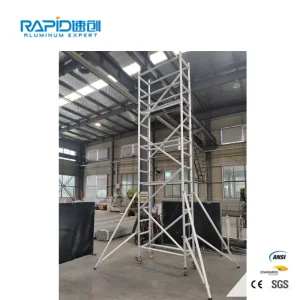
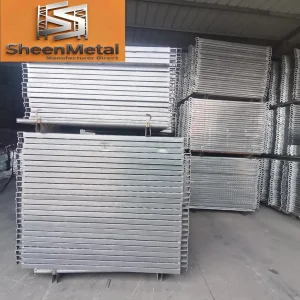
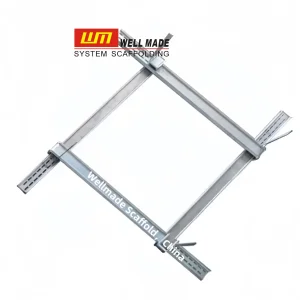
Explore our primary certified load-bearing hardware configurations. Rigorously engineered to perform under extreme tension and compression profiles across global regulatory environments.
Scaffolding structures form the critical life-safety backbone of modern multi-story developments, infrastructure, and heavy industrial assemblies. Accurate calibration of load ratings represents a sophisticated synthesis of structural mechanics, metallurgy, and material safety factors. Structural engineers differentiate these capacities based on expected usage profiles, calculating axial loads, bending moments, and localized shear stresses to prevent catastrophic failures under dynamic load fluctuations.
The standard operating load rating of a scaffolding installation is not simply the total capacity of its components, but rather the cumulative safety threshold calculated using the weakest component in the assembly. As defined by global structural codes (such as BS 5973 and ANSI A10.8), load ratings specify the maximum combined weight of personnel, machinery, and materials that can be safely sustained per square unit of deck space.
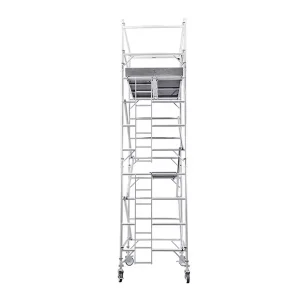
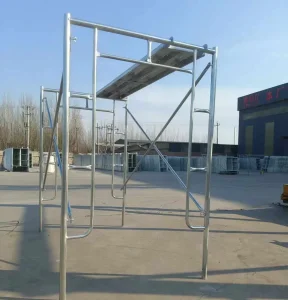
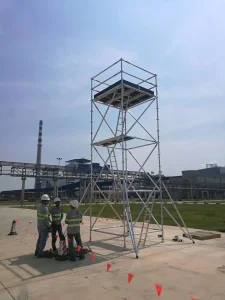
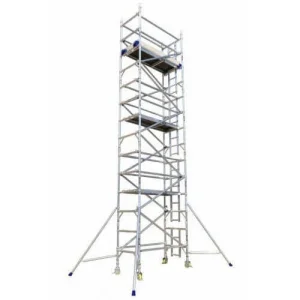
These loads are classified as Dead Loads (the weight of the scaffolding system itself, including metal standards, ledgers, braces, and decking platforms) and Live Loads (dynamic weights representing workers, equipment, stored concrete block units, and structural loads). For instance, standard mobile frames or ringlock structures must handle concentrated wind pressures alongside standard live loads without experiencing elastic deflection exceeding 1/360th of the span, protecting against failure under wind shear or minor seismic vibrations.
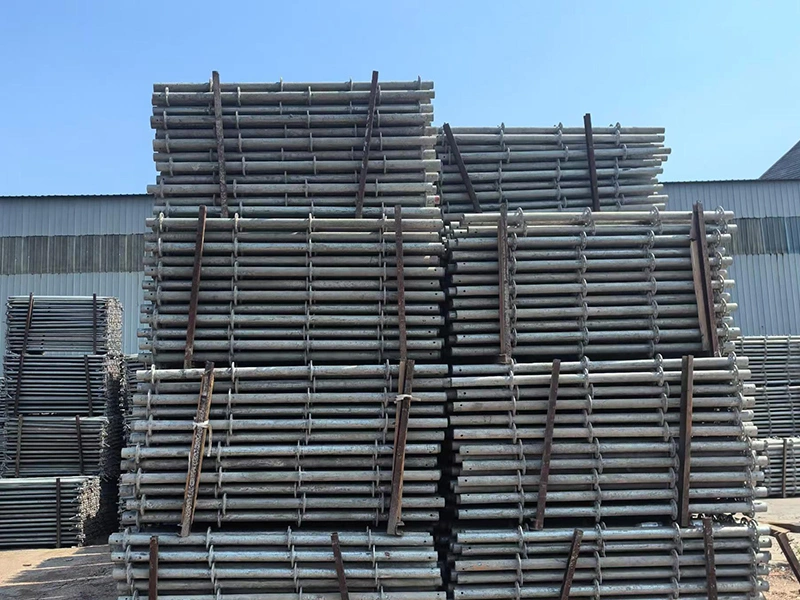
Different industrial jurisdictions apply distinct safety and structural standards to define scaffolding capacity. Compliance is key for structural engineers, project managers, and sourcing coordinators who must evaluate whether imported components meet regional safety profiles.
| Load Class | Working Load Limit (Metric) | Working Load Limit (US Imperial) | Typical Applications & Trade Profiles | Regulatory Equivalents |
|---|---|---|---|---|
| Light Duty | 1.50 kN/m² | 25 lb/ft² | Inspecting, painting, electrical installations, residential plastering | EN 12811-1 Class 2, OSHA Light Duty |
| Medium Duty | 2.00 kN/m² | 50 lb/ft² | Bricklaying, general masonry construction, framing installations | EN 12811-1 Class 3, OSHA Medium Duty |
| Heavy Duty | 3.00 kN/m² | 75 lb/ft² | Heavy concrete blockwork, structural steel erection, industrial maintenance | EN 12811-1 Class 4, OSHA Heavy Duty |
| Special Duty | >3.00 kN/m² | >75 lb/ft² | Heavy shoring systems, civil bridge construction, massive energy infrastructure projects | EN 12811-1 Class 5/6, Custom Structural Design |
Requires structural analysis verifying stability, deflection limits, and safety factors. The standard defines six load classes (150 to 600 kg/m²) and mandates specific anti-slip criteria for galvanized planks and structural platforms.
OSHA 1926.451 mandates that every scaffold and scaffold component must support without failure its own weight and at least 4 times the maximum intended load applied to it (4:1 safety factor ratio).
Outlines strict regulations regarding materials, designs, and testing of scaffolding systems. It mandates rigorous physical load tests for ringlock modular connections to certify stability under vertical and horizontal pressures.
As a leading developer, manufacturer, and global exporter of high-performance scaffolding structures, Hangzhou Shubrixa Build Co., Ltd. produces structural components designed for demanding construction environments. Capitalizing on the industrial advantages of Xian County—known as *China’s Hometown of Construction Equipment*—we manufacture scaffolding assemblies that deliver performance and long service lives.
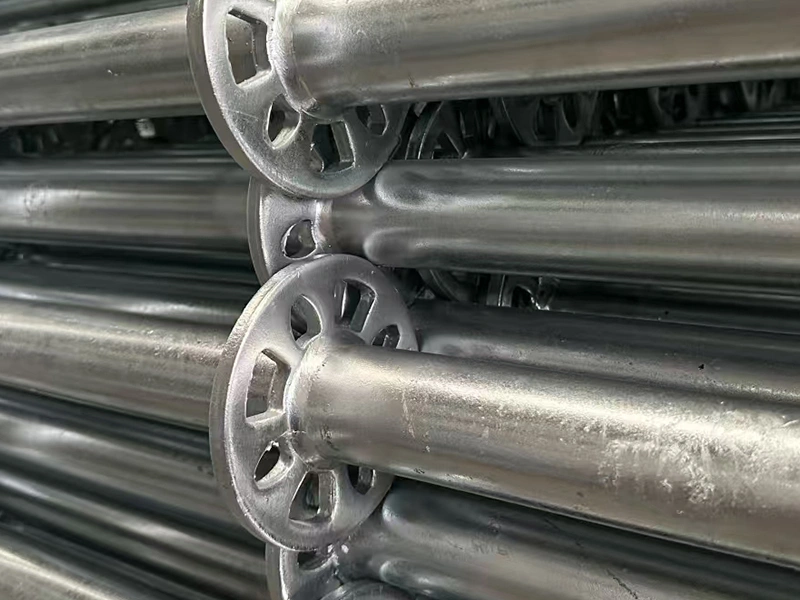
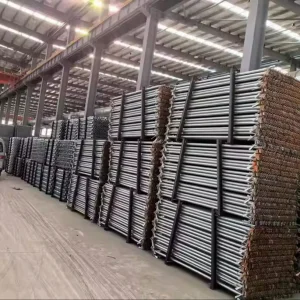
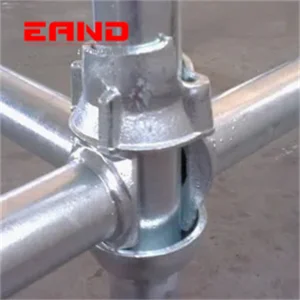
Our ledgerlock and modular ringlock systems are manufactured using high-strength Q355B alloy steel. Our vertical standards feature a 60 mm outer diameter with a wall thickness of 3.2 mm. This profile delivers a single-pole axial load capacity of up to 10 metric tons when used with our adjustable jacks. This performance is achieved through the use of refined silicon-manganese alloys that increase yield limits and structural stability.
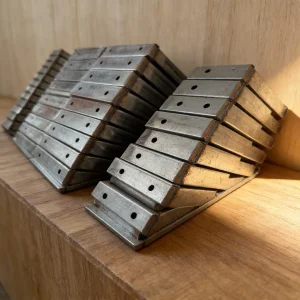
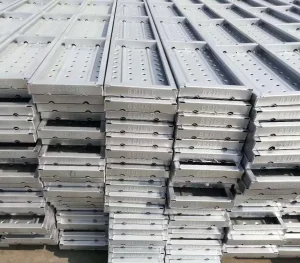
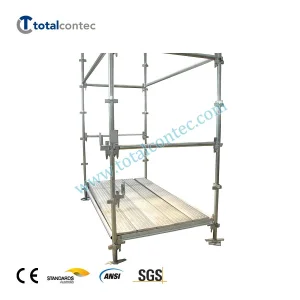
Our galvanized steel planks (1.2m x 0.3m) feature optimized perforations to balance weight and structural stiffness, maintaining an anti-slip profile that supports a long service life. These components are designed for over 200 reuse cycles in harsh environmental conditions. Additionally, our press-formed 4.0 mm steel mesh safety panels feature 40mm x 80mm diamond openings, providing a high tensile strength of 100 KN/m and fire resistance properties that outperform traditional wood or bamboo alternatives.
Global developers and industrial general contractors require sourcing partners that combine engineering expertise with reliable supply chain logistics. Operating within the industrial cluster of Xian County, Hangzhou Shubrixa Build Co., Ltd. maintains a robust supply network and production capacity that minimizes lead times for global clients.
Our strategic manufacturing location in Xian County provides access to regional steel refineries, specialized hot-dip galvanizing plants, and skilled labor, allowing us to maintain competitive production timelines and manufacturing efficiencies.
Our ISO9001-certified quality control protocol monitors production from raw steel analysis through to final component testing. This comprehensive monitoring allows us to achieve a finished product pass rate of over 99.8%.
Supported by a comprehensive logistics network and strategic storage sites, we provide 48-hour delivery services for urgent domestic requirements and coordinates efficient loading and transit schedules for international shipments.
Modern construction demands higher structural capacities, lower installation times, and reduced environmental impacts. Our product development pipeline focuses on three key areas to support the next generation of building practices:
We are expanding research into ultra-high-strength steel alloys that reduce overall scaffolding weight by up to 15% while maintaining rated load capacities. This helps reduce transportation emissions and lowers labor fatigue during installation.
We are developing component databases compatible with Building Information Modeling (BIM) workflows. This allows structural engineers to design scaffolding layouts and run digital finite element analyses to verify stability before site delivery.
In response to international carbon borders (such as Europe's CBAM), we are transitioning toward low-emission steel sourcing and optimizing our galvanization methods to reduce energy consumption and chemical waste.
Explore answers to common questions regarding structural scaffolding load capacities, material specifications, and regulatory compliances.
A: Q355B steel is a low-alloy, high-strength structural steel with a yield strength of 355 MPa, compared to 235 MPa for standard Q235. This higher yield strength allows vertical standards to support higher axial loads and increases structural resistance to buckling, improving safety under heavy loading conditions.
A: The 10-ton capacity is determined through destructive testing and finite element analysis (FEA) under axial compression. Tests utilize our 60 mm diameter, 3.2 mm wall-thickness Q355B steel tubing, combined with adjustable base jacks and secure locking ledgers to simulate worst-case load conditions with a built-in safety factor.
A: We utilize hot-dip galvanization according to ISO 1461, ensuring a consistent zinc layer thickness (average 85 microns) that protects the steel from environmental corrosion. The slip-resistant surface pattern is designed to retain grip and structure through more than 200 standard reuse cycles.
A: Our 4.0 mm press-formed steel mesh panels provide consistent tensile strength (up to 100 KN/m) and high fire resistance. Unlike wood or bamboo, they do not absorb moisture, decay, or degrade under UV exposure, providing consistent, measurable load capacities throughout their operating life.
Examine our broader range of components, frames, and structural accessories engineered to support safe access and load management on construction sites.
 Shubrixa Build